Too many rocket scientists to make rockets?
Seems to be the case.
Quite the weekend for rocketry fans. On Friday SpaceX sent Starship into orbit. The booster was supposed to return minutes later, and it did, just not in one piece. SpaceX didn't panic. The ship kept going, reached orbit, dropped off 26 Starlink satellites and stayed up more than 22 hours before coming back Saturday for the catch.
It would take a lot to top that as a visual spectacle.
ULA said hold my beer. Their big boy, the Vulcan, lifted off the next day with 40 Amazon satellites, and just ten minutes off the pad…well, we all know the rest of the story.
Why does SpaceX have such a distinct advantage over its competition? Could it be as simple as the number of rocket scientists on staff?
Perhaps. But not the way you think.
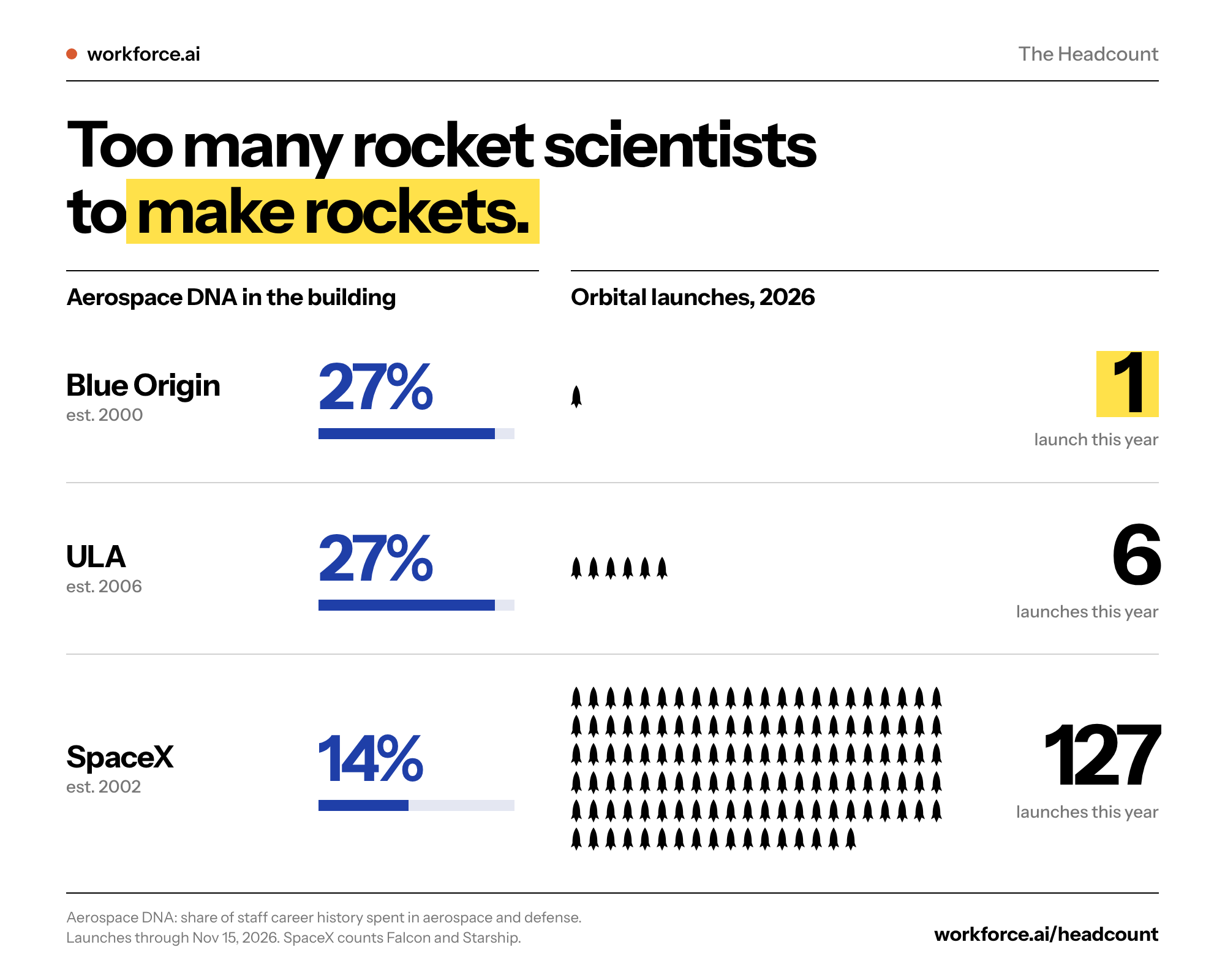
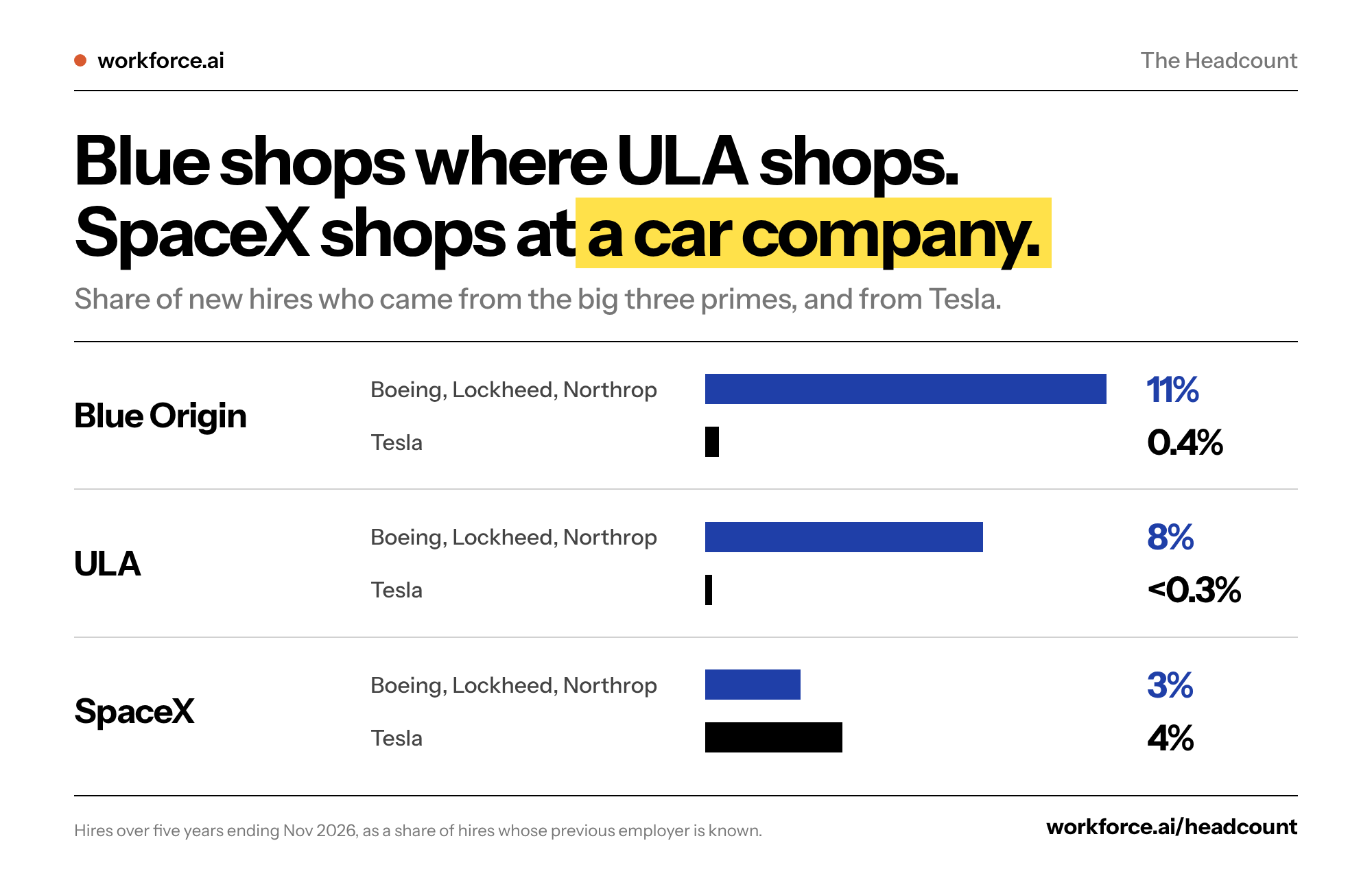
Line up the career histories at ULA and Blue Origin and you can't tell them apart. They hire from Boeing, Lockheed, Northrop, and each other.
SpaceX hires from Tesla, more than from all three primes combined. Rocket company with car-company DNA.
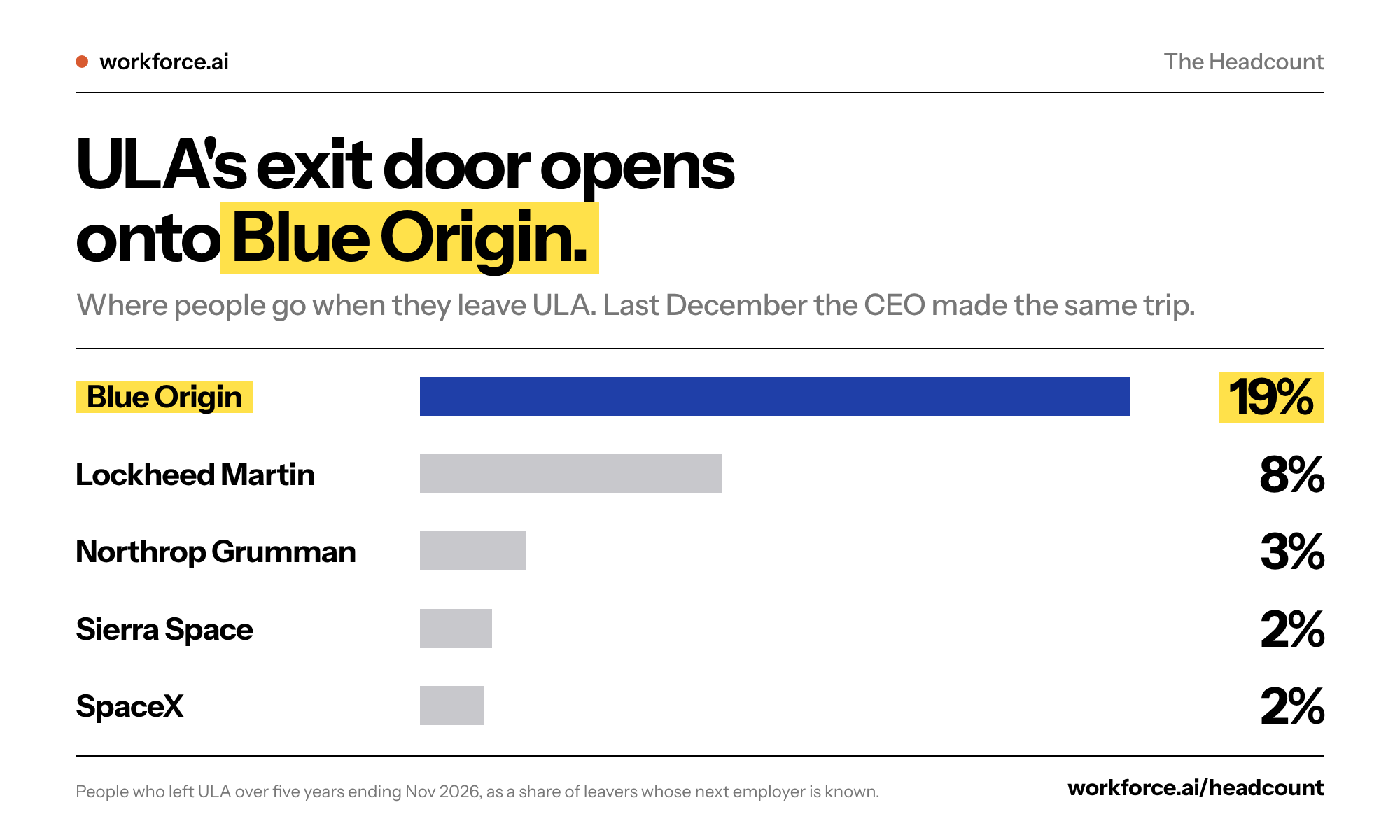
And when people leave ULA, one in five lands at Blue. Last December the CEO made the trip.
So can a rocket company actually have too many rocket scientists? The data suggests the more aerospace-y a company is, the less it launches.
If rocket science really is rocket science, Elon's trick is hiring people who don't know that.